
Bonnie Sōshin Mitchell’s Enduring Contributions to Shoseian Teahouse in the Seattle Japanese Garden (1979–2011)
Following the 1973 fire that destroyed the original teahouse, Bonnie Sōshin Mitchell played a central and indispensable role in the revival and long-term development of Shoseian as a premier site for the practice and teaching of Chadō (the Way of Tea) in the Pacific Northwest. After extensive training at Urasenke headquarters in Kyoto (1975–1981), Mitchell was appointed tea master of Shoseian by the Urasenke Foundation in 1981. That same year, Grand Tea Master Sen Sōshitsu XV formally opened and named the rebuilt teahouse Shoseian (“Arbor of the Murmuring Pines”). Mitchell co-founded a pioneering University of Washington credit course on Chadō and Japanese Aesthetics (offered 1981–2013, later revived 2017–2020), which combined classroom lectures with hands-on tea practice in Shoseian until 1990. Throughout the 1980s and beyond, Mitchell demonstrated exceptional initiative and organizational skill:
She established daily cleaning routines for the teahouse and roji garden, addressing gaps in routine maintenance by the Seattle Parks Department.
In 1982 she co-founded Shoseikai (Friends of the Teahouse), which supported monthly member gatherings and public demonstrations for nearly four decades.
She personally funded and carried out numerous improvements, including storage solutions, wall plastering to simulate traditional earthen surfaces (1989), and garden enhancements (2006).
She coordinated four regional three-day Tea Ceremony Seminars (1984–1996) and introduced specialized workshops (e.g., Kōdō incense ceremony, 1986).
In 1985 she became director of the newly established Urasenke Foundation Seattle Branch (UFSB), expanding programming and instruction.
After 16 years of persistent advocacy, she successfully launched popular participatory Sunday public tea gatherings with matcha service in 1997, funded through ticket sales.
She initiated annual Children’s Day tea ceremonies (1995), expanded participatory public gatherings (2005), and led a ten-day study tour to Kyoto for 30 practitioners (2006).
She organized major visits, including that of Grand Tea Master Hounsai Sen Sōshitsu XV in 2008, and coordinated significant Urasenke-funded renovations (1990, 2007).
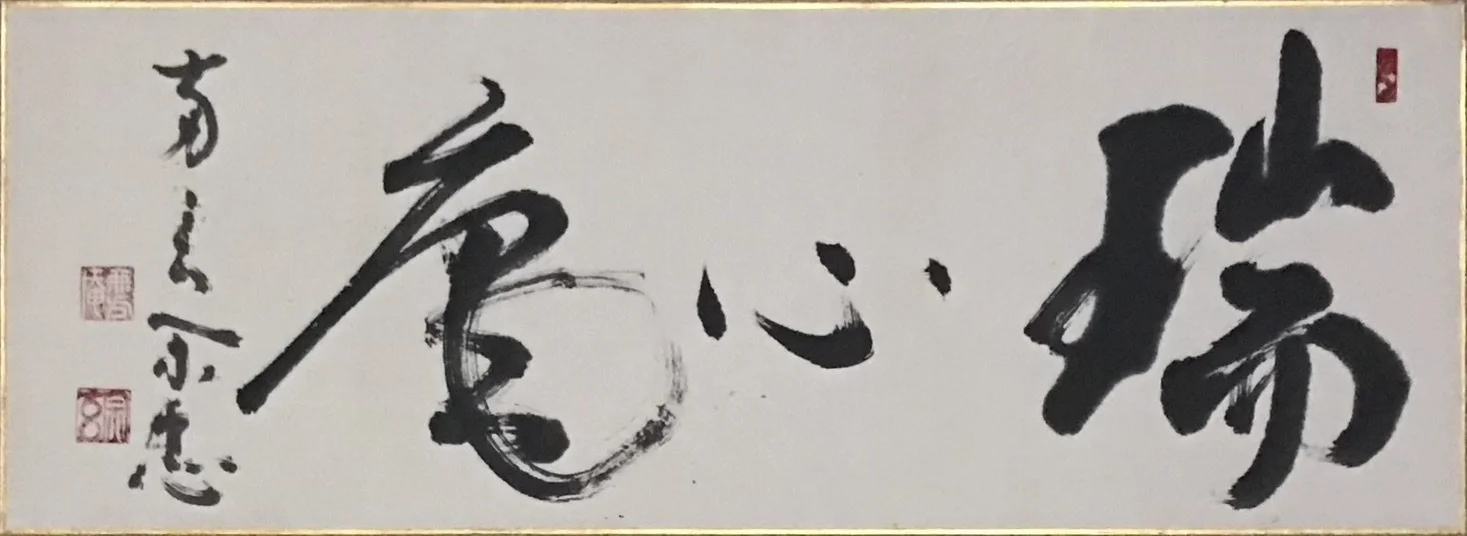
These efforts were frequently carried out in the context of limited resources and staffing from the Seattle Parks Department. Notable examples include the relocation of UW studio classes off-site in 1991 due to the absence of restroom facilities in the garden, (not even a porta-poty), and Mitchell’s consistent assumption of routine maintenance tasks not regularly performed by city gardeners. The 30-year Memorandum of Understanding (1981) among the City of Seattle, the University of Washington, and the Urasenke Foundation provided the formal framework for use and upkeep of Shoseian. When Urasenke closed its Seattle Branch in 2010 for budgetary reasons, the agreement was terminated by the Seattle Parks Department. In 2011, Mitchell declined the city’s request to continue providing uncompensated maintenance and stewardship. She respectfully transferred the calligraphic scroll “Shoseian” (brushed by Sen Sōshitsu XV) to Parks staff and ensured that tea ceremony utensils and artworks were donated so that public programs she had developed could continue under city management.Bonnie Sōshin Mitchell’s sustained leadership, scholarly contributions, international coordination, personal financial support, and tireless volunteer service over more than three decades transformed Shoseian into a widely respected center for tea culture education and practice in the region. Her work stands as a model of dedicated cultural stewardship and community engagement.
Chronology of the Seattle Japanese Garden teahouse from 1979-2011
1979:
To rebuild the teahouse in the Seattle Japanese Garden (after the 1973 fire), the Arboretum Foundation Unit #86 raised $60,000. Garden patron Prentice Bloedel offered to match funds if a total of $100,000 could be raised. The Urasenke Foundation of Kyoto contributed $40,000 bringing the total to $100,000, triggering Bloedel’s matching grant and fully funding the reconstruction. Urasenke generously offered to build and donate an entire functional teahouse complex; however, Unit #86 declined the proposal, opting instead to restore the original six tatami mat teahouse.
1980:
The Seattle City Council, the University of Washington, and the Urasenke Foundation of Kyoto formed a partnership to rebuild the Seattle Japanese Garden teahouse. Urasenke’s aim was to establish it as a focal point for fostering a broader understanding of Japanese culture through Chadō, the Way of Tea.
1981:
· A Memorandum of Understanding for the Use and Maintenance of Shoseian teahouse in the Seattle Japanese Garden was established between the City of Seattle, the University of Washington, and the Urasenke Foundation. This agreement encompassed various activities, including classes, workshops, tea presentations, and maintenance that included daily cleaning of the interior and exterior of the teahouse and garden waiting shelter, and bi-annual deep cleaning. The shoji screens were repapered annually and every decade the tatami mats were replaced.
· Bonnie Sōshin Mitchell was appointed as the tea master of Shoseian by the Urasenke Foundation of Kyoto, following her studies at the Urasenke headquarters from 1975-1981.
· Urasenke Foundation Grand Tea Master Sen Sōshitsu XV celebrated the opening of the teahouse and named it Shoseian ‘Arbor of the Murmuring Pines.’
· UW Art History Professors Glenn T. Webb and Bonnie Sōshin Mitchell launch the Chadō and Japanese Aesthetics credit course, with Tea practice held in Shoseian teahouse until 1990 and lectures held on campus. The course was offered three quarters a year and funded by Urasenke Foundation from 1981-2013. It was reoffered in the Department of Asian Languages and Literature from 2017-2020.
· Arboretum Foundation, Unit #86, collected and planted mountain moss the roji tea garden.
· Mitchell initiated daily tea garden cleaning that was not provided by the understaffed Seattle Parks Department gardeners.
1982:
· Shoseikai, Friends of the Teahouse, was formed by Mitchell, Glen T. Webb, Aiko Fujii, Chieko Becker, and Masae Locke to welcome tea practitioners from various traditions to use the teahouse for monthly member tea gatherings.
· Mitchell launched monthly public Shoseian Teahouse Demonstrations.
· Mitchell installed shelves in the storage closet, and a storage platform in the crawl space beneath the kitchen mizuya.
1983:
· Mitchell transferred the management of the monthly public Shoseian Teahouse Tea Demonstrations to Shoseikai, that continued until 2018, when Shoseikai was disbanded by the Seattle Park Department who took over management of the public demonstrations and maintenance of the teahouse.
· Shoseikai donated a Rikyu-style two-fold screen to Shoseian.
1984:
· Mitchell, in coordination with Urasenke Foundation of Kyoto, launched the first three-day Tea Ceremony Seminar for tea practitioners from Oregon, Washington, and British Columbia. The seminar was held in Shoseian.
1985:
· Urasenke Foundation of Kyoto established the Seattle Branch of the Foundation (UFSB) with Mitchell as director.
1986:
· Mitchell coordinated a Kōdō Incense Ceremony workshop with Shoyeidō Incense Company of Kyoto and the grand incense master of the Shino tradition of Kōdō.
1987:
· Wm. Patterson Sōki Pope joined Urasenke Foundation Seattle Branch (1987-1993).
· Prof. Glenn T. Webb departed UW for Pepperdine University, and Wm. Patterson Sōki Pope replaced Webb as Chadō course lecturer (1987-2002).
1988:
· The second three-day Tea Ceremony Seminar for tea practitioners from the region was coordinated by Mitchell with Urasenke Foundation of Kyoto.
1989:
· Mitchell and Shoseikai funded the removal of grass cloth wallpaper and the plastering of plywood walls to simulate traditional earthen walls.
1989-1997:
· Mitchell coordinated with Sekisui House, Chanoyu demonstrations at Bellevue Square, in the teahouse donated to the City of Seattle by Sekisui House, later renamed the Nagomi Teahouse. The teahouse is now in the City of Tacoma.
1990:
· Urasenke Foundation of Kyoto replaced the Shoseian ten tatami mats, installed an overhead light fixture, and applied paper wainscoting to the tearoom.
1991:
· Mitchell relocated UW Chadō studio classes to a private Madison Park residence due to the lack of onsite Garden restrooms, but continued to coordinate monthly public Tea Demonstrations, Seasonal Tea Gatherings, and teahouse maintenance.
1992:
· Mitchell served as liaison for the installation of the Ryokusuian teahouse in the Seattle Art Museum, donated by Urasenke Foundation of Kyoto.
· Mitchell coordinated the third three-day Tea Ceremony Seminar for regional tea practitioners with Urasenke Foundation of Kyoto.
· Mitchell and Kazuyuki Murata funded the plastering of painted plywood walls in the garden waiting shelter.
1995:
· Mitchell launched annual Children’s Day tea ceremonies at Shosei’an teahouse.
1996:
· Mitchell coordinated the fourth three-day Tea Ceremony Seminar for practitioners from the region with Urasenke Foundation of Kyoto.
1997:
· After petitioning a resistant Seattle Park Department for 16 years, Mitchell launched the highly popular public Sunday tea demonstrations with the service of matcha, funded by the sale of tea tickets.
1999:
· Timothy Sōwa Olson joined UFSB as an instructor.
2002:
· Timothy Sōwa Olson served as UW lecturer and lead studio instructor of the UW Chadō course (2002-2010).
2004:
· Shoseian was the setting for a tea ceremony film produced by the Seattle Art Museum for use in the museum’s tea house gallery.
2005:
· Mitchell expanded the participatory public Tea Gatherings with matcha as part of the Japanese Garden Advisory Council’s fundraising campaign for a new gatehouse.
2006:
· Mitchell led a ten-day tour for 30 tea practitioners to experience the Tea culture of Kyoto.
Mitchell funded and cooperated with senior gardener James Thomas to enhance the inner and outer roji tea garden at Shoseian.
2007:
· Mitchell coordinated with Urasenke Foundation of Kyoto to replace ten tatami mats, six sliding interior doors, and repaper the paper wainscoting, and shoji screens.
2008:
· Mitchell hosted Hounsai Sen Sōshitsu XV’s visit to Seattle, including various tea ceremonies and lectures.
2010:
· In a cost saving measure, Urasenke Kyoto closed its Seattle Branch, which subsequently reorganized as the East-West Chanoyu Center (EWCC).
· Seattle Parks Department terminated the 30-year Shoseian Use Agreement with Urasenke Foundation of Kyoto and the University of Washington.
2011:
· Mitchell declined the City’s request to voluntarily maintain Shoseian teahouse and garden without compensation.
· Mitchell transferred the calligraphic scroll “Shoseian” brushed by Sen Sōshitsu XV to the Seattle Parks Department, Lisa Chen.
· EWCC donated tea ceremony art and utensils to Parks, for Parks to continue the public tea programs Mitchell developed.