
Experiencing a Tea Gathering in the Summer
The Japanese tea ceremony, known today as Chanoyu, the practice of tea, or Chadō, the philosophy of tea, was perfected in the 16th century through the vision of the renowned tea master Sen no Rikyū. Trained in both Tea and Zen, Rikyū perfected wabi-cha — the “tea of refined rusticity.” He taught that grand tea pavilions and rare delicacies are unnecessary distractions. A small modest shelter from the rain and food enough to satisfy hunger are all that are required to enjoy tea.
Under his influence, Rikyu transformed the once lavish tea gatherings that the samurai elites used to display wealth and status - into expressions of heartfelt hospitality that transcend social rank. In Rikyu’s tearoom, all distinctions dissolved. In a space of mutual respect, he cultivated a mind free of judgment.
When a bowl of tea is served with humility and care, it creates a profound sense of connection. This is achieved through attention to every detail — the arrangement of the tearoom and garden, the selection of seasonal food and tea utensils, and most importantly, the warm service extended to each guest. Every effort of the host is guided by the spirit of Ichi-go Ichi-e (一期一会) — “One time, one meeting.” Meaning treasure this moment, for it will never come again.
The tearoom embodies the essence of wabi-cha: all unnecessary ornamentation has been stripped away so that human connection is foremost. The quiet space exemplifies characteristics of refined rusticity - simplicity, imperfection, asymmetry, and unadorned natural beauty.
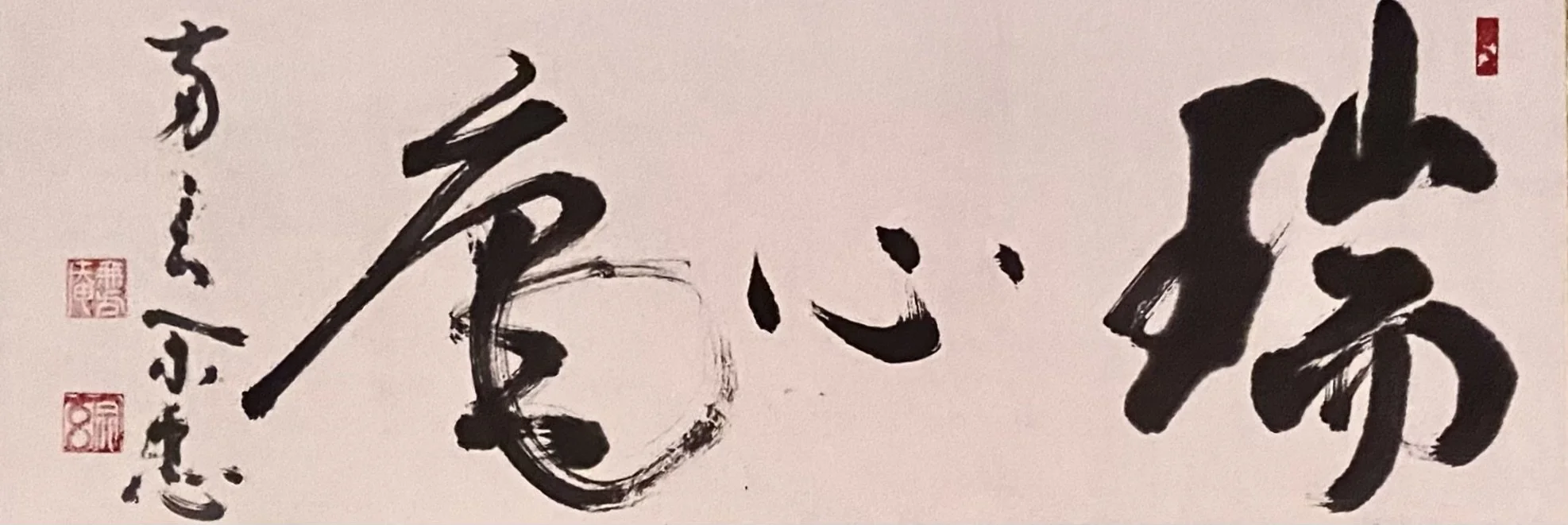
In the tokonoma alcove, three elements set the tone: a Zen calligraphic scroll, a small incense container, and a basket of seasonal flowers. For today’s gathering, the scroll reads “This Day Is a Fine Day,” inviting us to meet each moment without judgment. The incense container, shaped like a pearl-diving boat, suggests coolness, while the perennial day lilies chosen as they open and close in a day silently remind us of time’s passage.
On the host’s tea making mat stand the iron kettle and ceramic brazier.
Now the host enters the tearoom and welcomes you with warm, brief salutations and a deep bow of respect. Guests return his bow to establish mutual respect.
In a significant departure from the elite samurai traditions, the host prepares the tea himself, in the presence of the guests. But before he prepares the tea, the host places seasonal sweets before each guest, to be enjoyed just before the tea is served.
The host then returns to the preparation room. Now, with the cold-water jar placed at the tearoom entrance, he announces he will prepare tea, and bows, signaling the start of the tea-making procedure. He carries in the cold-water jar with mindful, deliberate steps. In Chanoyu, every action — even the simple act of carrying water — becomes a living expression of the spirit and teaching of generations of Tea and Zen masters. As the Tong dynasty Zen masters taught, “when you walk just walk.” (Hyakujō Ekai & Rinzai Gigen).
Next, the host carries in the teabowl and tea container, followed by the waste-water container with a ladle and lid rest. He precisely arranges the items on the mat according to rules formulated by Zen monastic practices in ancient China.
With calm attention, he folds the silk cloth to purify the lacquer tea container and then the bamboo scoop. With these actions he focuses on his breath. Then he lifts the ladle and scoops hot water from the kettle that will warm the bowl and soften the tines of the tea whisk. Next he measures the matcha into the bowl, ladles the water, and whisks the tea with fluid, focused movements until it reaches a fine, frothy consistency.
Every gesture flows from a tranquil mind, free of distraction. Host and guests unite in a single, unbroken presence. Conversation remains minimal as everyone stays fully attentive with all their senses. Before drinking, the guests acknowledge one another, then raise their bowls in silent gratitude — to the labor of many hands and to the blessings of the earth and sky that make this single bowl of tea possible.
To evoke a sense of coolness amid the summer heat, the host has chosen utensils with refreshing motifs: gold carp swimming across the green-glazed cold-water jar, fireflies glowing on the tea bowl, a kingfisher perched on the lid of the tea container, an inverted umbrella-shaped flower basket suggesting light summer rains, and a bamboo scoop named Koke Shimizu — “Cool Stream Flowing Over Mossy Rocks.”
Once all guests have received their desired amount of tea, the host brings the gathering to a close. The tea container and bamboo scoop are carefully cleaned, the kettle is replenished with fresh water, and the implements on the preparation mat are removed. Finally, he carries out the cold-water jar and thanks the guests with a deep bow. With order restored, the ceremony comes full circle with warm parting salutations and a final bow exchanged between host and guests.
What was just presented is the fourth and final act of a full-length tea gathering. This is usucha (thin tea), in which a whisked bowl of tea is prepared individually for each guest.
The first three acts consist of a multi-course kaiseki meal made with seasonal ingredients, the careful laying of the charcoal fire in the brazier, and the preparation of a single bowl of koicha (thick tea) that is shared among all participants.
Sen no Rikyū was once asked, “What is the essence of tea?”
He replied:
“The Way of Tea is nothing more than this: first you boil the water, then you make the tea, and then you drink it.”
The questioner responded, “If that is all there is to it, what is all the fuss about?” Rikyū answered, “If you can truly do just that, I will become your student.”
The spirit of Chanoyu offers a living model for everyday life. Whatever we are doing -whether engaged in ordinary or elevated tasks - we can bring the same wholehearted presence of harmony, respect, purity, and tranquility to each moment. In this way, Chanoyu remains as relevant today as it was centuries ago providing a quiet gateway to fully awaken to every passing moment before it fades away.